
Dubai to Build the World’s Largest Airport – A Strategic Leap for Global Aviation
Published 10 months ago
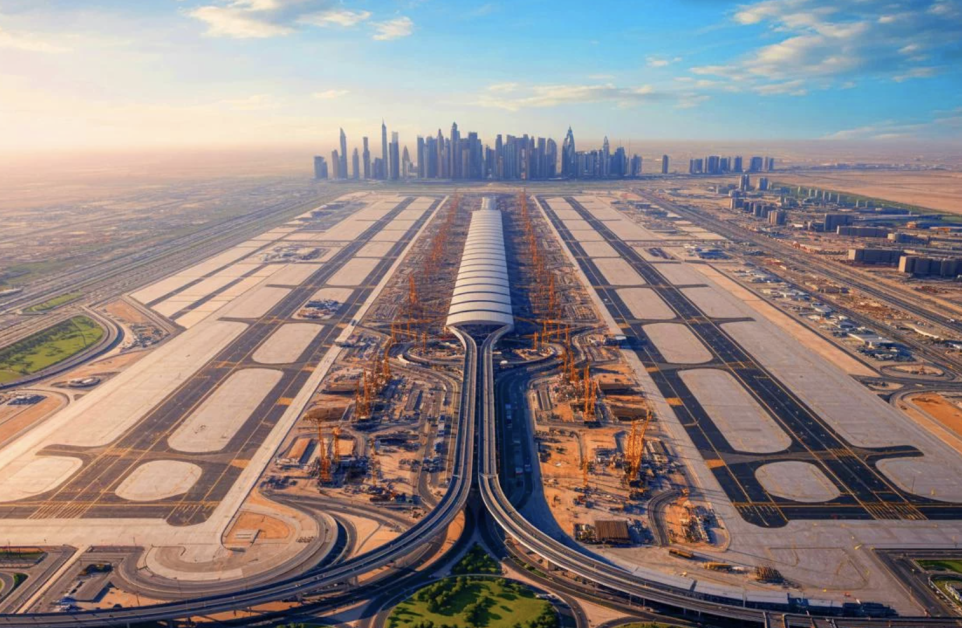
Dubai is building what will become the world’s largest airport at Al Maktoum International (Dubai World Central), with an investment of about AED 128 billion (~US$35 billion)
Dubai has announced an ambitious $35 billion expansion of Al Maktoum International Airport (DWC), positioning it to become the largest aviation hub in the world and a catalyst for regional and global economic growth.
When complete, DWC will feature 400 aircraft gates, five parallel runways for simultaneous operations, and capacity to serve 260 million passengers annually — over five times that of Dubai International Airport (DXB). This unprecedented scale will not only ease congestion at DXB but also strengthen Dubai’s status as the epicenter of international air travel.
Crucially, the project extends far beyond aviation. The airport will anchor the Dubai South mega-development, envisioned as a fully integrated urban ecosystem. It will provide housing for more than one million residents, generate employment for another million, and create an innovation-driven city built around connectivity, logistics, and commerce.
- For investors and industry stakeholders, the opportunities surrounding the development of the world’s largest airport in Dubai are both vast and multifaceted. The anticipated surge in passenger traffic and expanded cargo capabilities will unlock new avenues for international trade, tourism, and aviation-linked services. With its state-of-the-art infrastructure and strategic location, the airport is set to become a critical global transit hub, attracting airlines, tech providers, and supply chain players from around the world.
- Beyond aviation, the ripple effects of this mega-project will be felt across multiple sectors. The real estate market is poised for significant growth, with increased demand for residential, commercial, and industrial developments in surrounding areas. The hospitality sector will benefit from rising tourist arrivals and business travel, while the logistics and warehousing industries will expand to meet growing cargo volumes.
- Additionally, the financial services sector stands to gain through increased investment flows, new financing opportunities, and greater demand for banking and insurance solutions tailored to the needs of international businesses operating in and around the airport zone. As one of the most transformative infrastructure projects in the region, Dubai’s new airport represents a strategic leap forward—positioning the city as a future-proofed global hub for commerce, innovation, and connectivity.
The first phase is expected within the next decade, marking a decisive step in Dubai’s strategy to remain ahead of global aviation needs. With its combination of scale, innovation, and economic integration, DWC represents not just the future of airports, but the future of global business connectivity.